

Inflation-Proofing Your Savings: A Modern Guide to Digital Gold
Imagine you diligently saved $20,000 in cash, tucking it away in a standard savings account ten years ago. Today, that same $20,000 feels noticeably lighter. It no longer covers the same down payment on a car, the same family vacation, or the same amount of groceries. This isn’t a feeling; it’s a financial reality. The purchasing power of your money has been steadily eroded by a silent, persistent force: inflation. While traditional financial advice focuses on stocks and bonds, a time-tested asset has re-emerged in a modern format, offering a powerful tool for wealth preservation. This guide explores how digital gold provides a secure, accessible, and practical hedge against the devaluation of fiat currency.
The Unseen Tax: How Inflation Devalues Your Hard-Earned Money
Before exploring the solution, it is critical to understand the problem. Inflation is the rate at which the general level of prices for goods and services is rising, and subsequently, the purchasing power of currency is falling. For savers, it acts as an invisible tax that penalizes those who hold cash.
Understanding Fiat Currency and Purchasing Power
The U.S. dollar, like all major world currencies, is a fiat currency. This means its value is not backed by a physical commodity like gold or silver, but by the government that issued it. Central banks, like the U.S. Federal Reserve, have the authority to increase the money supply—essentially, to print more money. While necessary for managing economic policy, this action can dilute the value of every dollar already in circulation.
This dilution directly impacts your purchasing power. According to data from the U.S. Bureau of Labor Statistics, the cumulative rate of inflation over the last decade has been over 35%. In practical terms, this means that a basket of goods and services that cost $100 in 2014 would require over $135 to purchase today. Your dollars simply buy less than they used to, and this trend is a historical constant.
The Savings Account Dilemma
Many consumers believe their money is safe and growing in a high-yield savings account. However, the numbers often tell a different story. Financial institutions offer an Annual Percentage Yield (APY) on savings, but this return must be compared to the official rate of inflation.
- Scenario: You deposit $10,000 into a savings account with a 2.0% APY.
- Economic Condition: The annual inflation rate is 4.5%.
- The Result: While your account balance grows to $10,200, the cost of living has increased faster. Your real, inflation-adjusted return is actually negative. You have lost 2.5% of your purchasing power over the year.
This negative real yield is a fundamental flaw in relying solely on cash savings for long-term wealth preservation. Your savings are, in effect, losing value every day they sit idle in a system designed for currency devaluation.
Gold’s Enduring Role as a Store of Value
For millennia, across civilizations and economic crises, gold has been the ultimate store of value. Unlike fiat currencies, which can be created at will, the global supply of gold is finite and grows by only 1-2% per year through mining. This inherent scarcity is the foundation of its ability to preserve wealth over long periods.
A Historical Hedge Against Uncertainty
Historically, gold’s value tends to move inversely to the perceived stability of fiat currencies and economies. During periods of high inflation, geopolitical turmoil, or economic recession, investors and even central banks flock to gold as a safe-haven asset. For example, during the stagflation of the 1970s in the U.S.—a period of high inflation and stagnant economic growth—the price of gold surged dramatically, protecting the purchasing power of those who held it.
This is not speculation; it is a reflection of trust. When confidence in paper money wanes, the world instinctively returns to the one asset that has maintained its value for over 5,000 years. Research consistently shows that holding a portion of one’s assets in gold can provide a crucial buffer against the volatility of other financial assets and the certainty of currency devaluation.
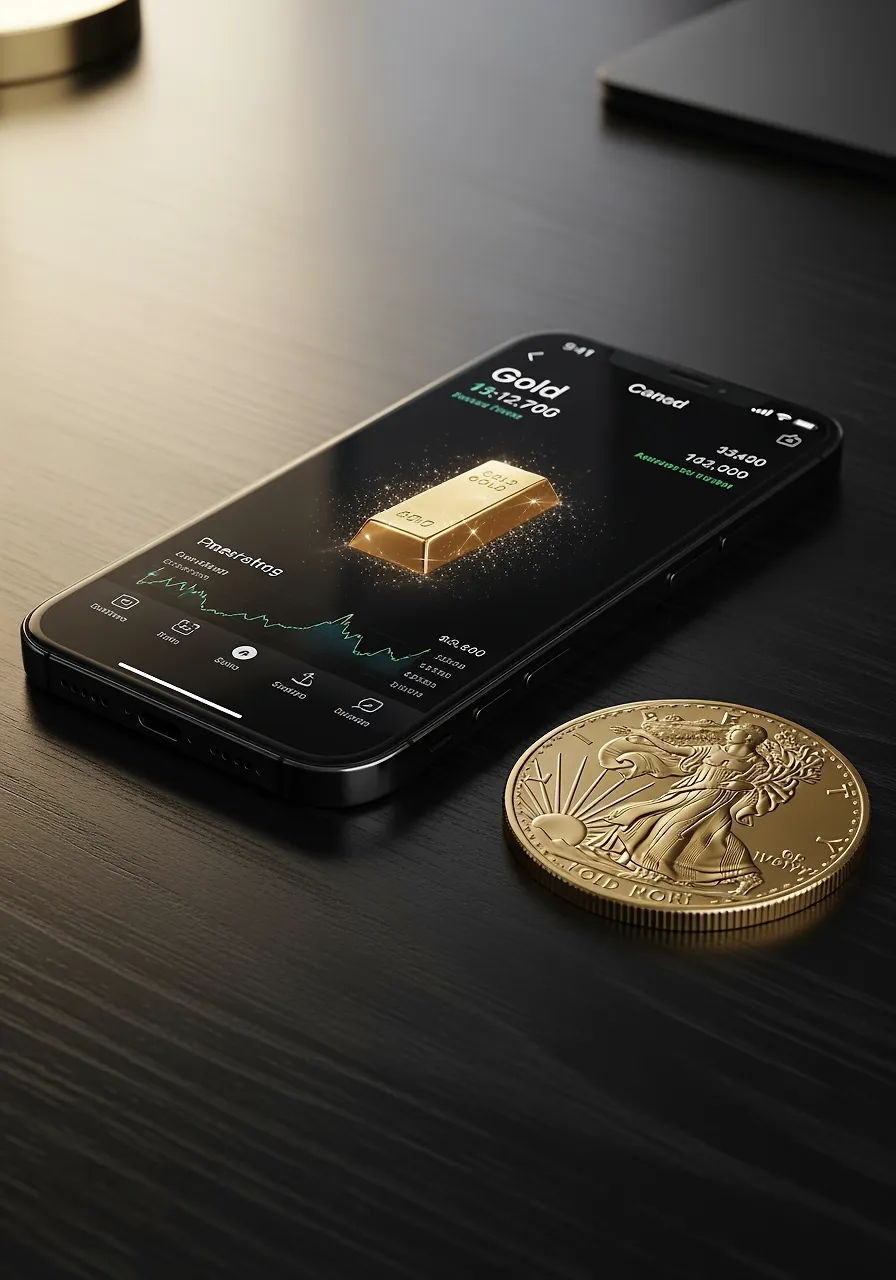
The Digital Revolution: Accessing Physical Gold Through FinTech
While the case for gold is compelling, the practicalities of buying, storing, and securing physical bullion have historically been a barrier for the average consumer. The process was often cumbersome, expensive, and illiquid. Today, financial technology (FinTech) has completely dismantled these barriers, creating a new category: digital gold.
What Exactly Is Digital Gold?
It is essential to be clear: digital gold is not a cryptocurrency, a stock, or a complex derivative. True digital gold represents direct, legal title to physical, allocated gold that is stored in a high-security, insured vault on your behalf. The key term here is “allocated.” This means a specific, identifiable quantity of gold (e.g., a bar with a serial number) is held in your name. You own it outright.
Digital gold platforms act as a modern custodian for your physical asset, providing a digital interface to manage it with the ease of a standard banking app.
The Benefits of a Modern Platform
This new model offers profound advantages for anyone seeking wealth preservation strategies:
- Accessibility & Fractional Ownership: The most significant innovation is the ability to buy fractional amounts of gold. Instead of needing over $2,300 to buy a full ounce, you can start preserving your wealth by converting as little as $1 from USD to gold. This democratizes access to an asset class once reserved for the wealthy.
- High Liquidity: Traditional physical gold can be difficult to sell quickly. Digital gold platforms allow you to buy or sell your gold holdings 24/7 with a few taps on your phone, converting it back to USD instantly when needed.
- Institutional-Grade Security: Your physical gold is stored in world-class, non-bank vaults (such as those operated by Brinks or Loomis), fully insured against theft and damage. This level of security is far superior to storing gold at home.
- Seamless Usability: The most revolutionary feature is the integration with everyday finance. Many platforms offer a debit card linked directly to your gold holdings, allowing you to spend the value of your gold anywhere major cards are accepted.
A Practical Guide: How to Use Digital Gold to Protect Against Inflation
Transitioning a portion of your savings from a devaluing currency to a stable store of value is a strategic financial move. Here are the practical steps to implement this wealth preservation strategy.
Step 1: Choose a Reputable Digital Gold Platform
Due diligence is paramount. Not all platforms are created equal. Experts recommend evaluating providers based on the following criteria:
| Criteria | What to Look For |
|---|---|
| Ownership Model | Ensures you have direct title to physical, allocated gold. Avoid platforms offering unallocated gold, which makes you a creditor. |
| Transparency | Clear and simple fee structure for transactions, storage, and card usage. No hidden costs. |
| Audits & Insurance | Regular, independent audits verifying the gold reserves match customer holdings. Full insurance on all vaulted assets. |
| Redemption | The option to take physical delivery of your gold, should you ever choose to. This confirms true ownership. |
| Usability | An intuitive mobile app, seamless integration with a debit card, and responsive customer support. |
Step 2: Develop Your Allocation Strategy
Using digital gold to protect against inflation is not a get-rich-quick scheme; it is a long-term defensive strategy. Rather than trying to “time the market,” financial pragmatists employ a disciplined approach.
One proven method is dollar-cost averaging (DCA). This involves converting a fixed amount of USD into gold on a regular schedule (e.g., weekly or monthly), regardless of the current spot price. This averages out price fluctuations over time and builds your holding in a steady, disciplined manner. Many digital gold apps allow you to automate these recurring purchases.
How much should you allocate? Financial advisors have long recommended an allocation of 5-15% of a portfolio to precious metals as a hedge. With digital gold, you can start with a small percentage of your cash savings and gradually increase your position as you become more comfortable.
Step 3: Integrate Gold into Your Financial Life
The true power of modern platforms lies in their utility. By linking your digital gold to a debit card, you transform a passive asset into an active one. When you make a purchase, the platform instantly sells the exact amount of gold needed to cover the transaction at the current spot price and settles the payment in USD with the merchant.
This process allows you to effectively live on a gold standard. Your wealth remains stored in an asset that protects against fiat currency devaluation, yet you retain instant liquidity for daily expenses. You are no longer just saving in gold—you are transacting with its value, seamlessly bridging the world of sound money and modern commerce.
Take Control of Your Financial Future
The financial landscape is clear: holding all your savings in cash or low-yield bank accounts is a losing proposition against persistent inflation. The devaluation of fiat currency is a feature, not a bug, of the modern monetary system. For decades, gold has served as the ultimate antidote, a reliable store of value that preserves wealth across generations.
Today, FinTech has made this ancient asset more accessible, liquid, and useful than ever before. Digital gold empowers you to opt out of a system that devalues your savings and take a proactive step towards financial sovereignty. By understanding the risks of inflation and leveraging these modern tools, you can build a resilient financial foundation and protect your long-term purchasing power. The first step is to start your research and choose a platform that aligns with your goals for lasting wealth preservation.