

Is Your Savings Safe? Why I Use Gold to Fight Inflation
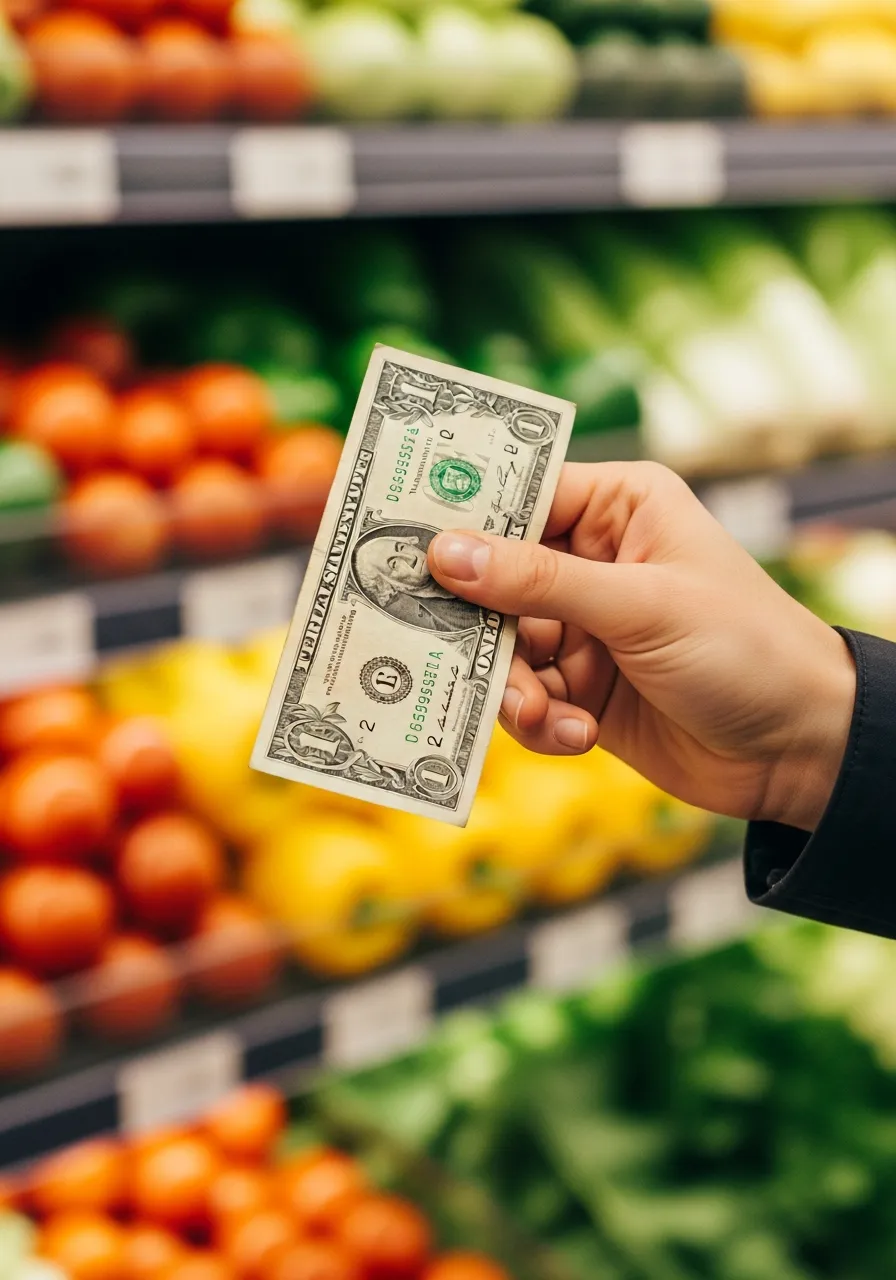
Every time I walk through the grocery store, I feel it. It’s a quiet, creeping sense of disbelief. I’ll pick up a carton of eggs or a gallon of milk—items I’ve been buying my entire adult life—and the price on the sticker just feels… wrong. It’s a few cents here, a dollar there, but it adds up. And with every upward tick, I’m reminded of a silent thief that’s slowly eating away at our hard-earned money: inflation. It’s a frustrating feeling, isn’t it? You work hard, you follow the traditional advice, you diligently put money into a savings account. You do everything you’re “supposed” to do. But when you look at your life, it feels like you’re running on a treadmill, working harder just to stay in the same place. That feeling is what put me on a mission to find a better way to protect my family’s future. It’s why I personally believe in gold, and I want to share my perspective with you.The Leaky Bucket: Why Your Savings Account Is Losing Ground
For generations, we’ve been taught that the safest place for our money is in the bank. And in terms of physical security, that’s largely true. But when it comes to protecting the value of your money, a traditional savings account has become a leaky bucket. Here’s the simple, uncomfortable truth: if your savings account is earning 1% or 2% interest (or even a “high-yield” 4-5%), but the real cost of living is rising by 3%, 5%, or even more, you are losing money. Not on paper, of course. Your statement will show your balance going up. But your purchasing power—what you can actually buy with that money—is going down every single day.I remember the moment this really clicked for me. I was looking at my own savings, proud of the discipline it took to build it up. But then I did the math. I calculated how much more expensive things like housing, gas, and food had become over the past few years and compared it to the tiny interest I had earned. The result was sobering. My savings weren’t truly growing; they were just depreciating a little more slowly than the cash stuffed under a mattress. That realization was a turning point for me. I knew I had to find a real way to protect the wealth I was working so hard to create.It’s a slow-motion financial crisis. We think our wealth is growing because the numbers are getting bigger, but the value those numbers represent is shrinking.
The Dollar’s Decline: A Story of Lost Purchasing Power
This isn’t a new phenomenon. The U.S. dollar has been steadily losing its purchasing power for over a century, ever since the creation of the Federal Reserve. It’s designed to be an inflationary currency. The stated goal is often a “healthy” 2% inflation per year. But what does that really mean? It means that the system is built to devalue your savings by at least 2% every single year, on average. Over a decade, that’s a significant loss. Over a lifetime of saving for retirement? It’s devastating.A Quick Look at the Numbers
Let’s put it in perspective. Think about what your parents or grandparents could buy with $100 back in, say, 1985 compared to what you can buy today. The difference is staggering. To make this tangible, I pulled some data from the Bureau of Labor Statistics’ inflation calculator.| Year | What $100 Could Buy in Today’s Dollars |
|---|---|
| 1980 | $370 |
| 1990 | $234 |
| 2000 | $178 |
| 2010 | $141 |
| 2020 | $121 |
My ‘Aha!’ Moment: Why I Turned to an Ancient Solution
Faced with this reality, I began searching for an alternative. I didn’t want to become a Wall Street trader or a high-risk speculator. I’m a saver, not a gambler. I was looking for something that could act as a stable foundation—a financial anchor in the stormy seas of fiat currency and inflation. My research led me back through history, past stocks, bonds, and complex derivatives, to something much older and simpler: gold. Honestly, I was skeptical at first. Gold felt… old-fashioned. Something my grandfather might have believed in. But the more I learned, the more I realized its timeless wisdom. For over 5,000 years, across virtually every civilization on Earth, gold has been recognized as a store of value. It’s real money. My name is Casey Miller, and my entire mission now is to help people understand this simple but powerful truth.Gold Isn’t ‘Backed’ By Anything—It IS the Backing
Unlike the U.S. dollar, which is a “fiat” currency (meaning its value comes from a government decree), gold’s value is inherent. It has a unique combination of properties that make it the ultimate form of money:-
It’s Finite: You can’t just print more gold. The supply is limited to what can be mined from the earth, which makes it resistant to the kind of devaluation we see with government-printed money.
It’s Durable: Gold doesn’t rust, tarnish, or decay. The gold that was mined by the ancient Egyptians is still with us today.
It Has No Counterparty Risk: A dollar is a promise from a bank or a government. A stock is a claim on a company’s future earnings. Gold is an asset that is valuable in and of itself. It doesn’t rely on anyone else’s promise to be worth something.
It’s Universally Valued: From New York to New Delhi, gold is recognized and accepted as a store of wealth.
How I Use Gold to Hedge Against Inflation
So, how does this work in practice? How am I actually using gold to hedge against inflation? The principle is quite simple. When the value of the dollar goes down (due to inflation), it takes more dollars to buy the same amount of a finite asset, like gold. As a result, the price of gold, when measured in dollars, tends to rise during periods of high inflation. It acts like a financial seesaw. I’ll share a personal story. A couple of years ago, when inflation was really starting to spike, I looked at my overall financial picture. My stock portfolio was volatile, and I could feel the value of the cash in my bank account shrinking with every trip to the gas station. But the portion of my savings I held in gold? It was holding its ground, and even increasing in dollar terms. It wasn’t making me rich overnight—that’s not its job. Its job was to be a stable anchor, and it was doing it perfectly. That experience gave me a profound sense of security. It was tangible proof that I had a way to protect my savings from inflation.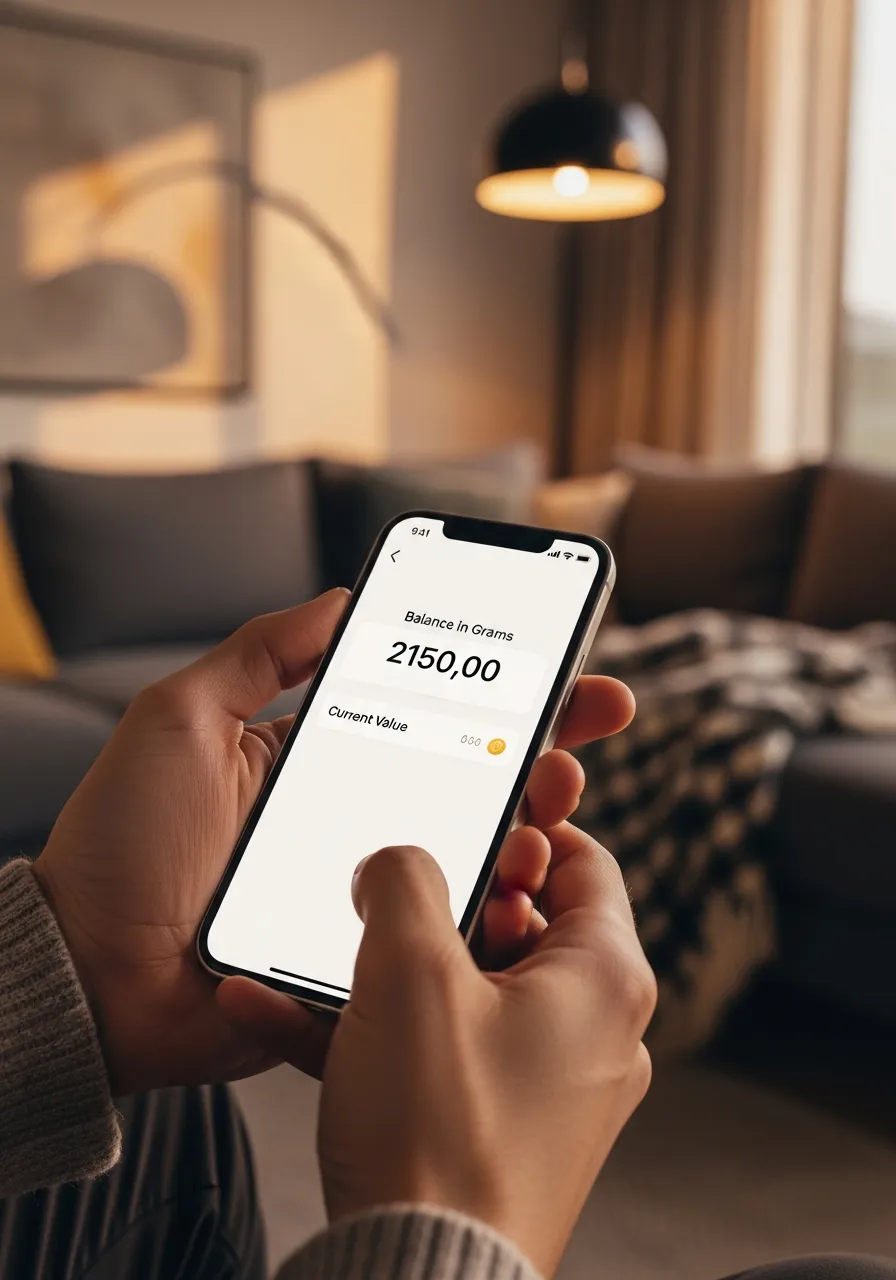
This Is About Protection, Not Speculation
I want to be crystal clear about this. For me, owning gold isn’t about trying to time the market or betting on price swings. I don’t check the price of gold every day like a stock. I see it as a long-term savings strategy. It’s the part of my wealth I’m setting aside for the far future—for my family, for retirement, for a legacy. It’s a defensive play, not an offensive one. It’s my financial shield.You Don’t Need a Shovel and a Map
When I first started down this path, the idea of buying gold was intimidating. I pictured heavy bars, secure vaults, and complicated dealer networks. And while that’s one way to do it, the great news is that technology has made owning real, physical gold easier and more accessible than ever before. Today, you can buy and save real, allocated physical gold digitally. Through trusted platforms, you can purchase fractions of a gram or full ounces with just a few clicks. This gold isn’t a paper promise; it’s actual, physical metal held in your name in a high-security, audited, and insured vault. You can buy a little at a time, just like you would contribute to a savings account. This is the innovation that I believe will empower a whole new generation to rediscover gold’s protective power.Building a More Resilient Financial Future
That feeling of frustration at the grocery store doesn’t have to lead to a feeling of helplessness. It can be a catalyst for change. It can be the wake-up call that prompts you to look for better ways to secure the future you’re working so hard to build. Learning about how our money really works and exploring alternatives like gold isn’t just an intellectual exercise—it’s an act of empowerment. It’s about taking back control from a system that is quietly devaluing your labor and your savings. I’m not suggesting you sell everything and put it all into gold. I believe in diversification. But I do personally believe that ignoring gold means ignoring one of history’s most proven tools for wealth preservation. For me, it’s the most logical and effective way to ensure that the money I save today will still have real, meaningful value for my family tomorrow and for years to come. Here’s to building lasting wealth, one gram at a time. All the best,Casey Miller
